Frequently Asked Questions
The most-asked questions about aquatic & wetland plants.
What exactly are aquatic and wetland plants?
They are vascular and non-vascular plants adapted to water-saturated environments, ranging from fully submerged species to those rooted in mud with leaves held above the surface. The group spans everything from tiny bryophytes in peat bogs to towering reeds and showy lotus blooms.
What are the main categories within this plant group?
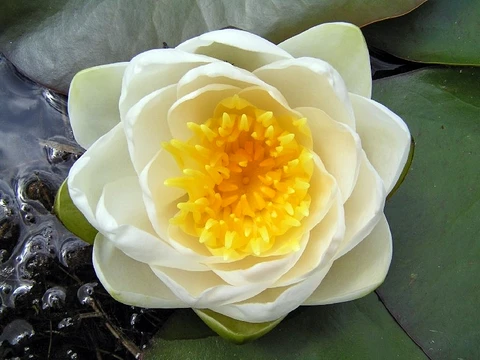
The community generally sorts them into emergent (reeds, sedges), floating-leaved (water lilies), submersed (hornwort, vallisneria), and free-floating (duckweed, water lettuce) groups. Each category represents a distinct strategy for coping with oxygen-poor root zones and variable water depth.
Why are they ecologically important?
They anchor the base of freshwater food webs, stabilize shorelines against erosion, and actively filter excess nutrients and pollutants from the water column. Wetland plant communities also provide essential nesting, foraging, and breeding habitat for birds, amphibians, and invertebrates.
What are some of the most iconic species fans and newcomers love?
The sacred lotus (Nelumbo), blue water lily (Nymphaea), and common reed (Phragmites) are probably the most widely recognized worldwide. In the aquascaping and pond-keeping communities, Java fern, Anubias, and various Echinodorus species are near-household names.
How do they differ structurally from typical land plants?
Many possess aerenchyma—spongy tissue riddled with air channels—that shuttles oxygen to submerged roots, and several lack a thick waxy cuticle because transpiration loss is irrelevant underwater. Their root systems typically anchor in soft, anaerobic sediment rather than gripping mineral soil.
Where on Earth can you find them?
They occur on every continent that has freshwater or brackish water, from tropical peat swamps to boreal fens and alpine tarns. The greatest species diversity is concentrated in the tropics and subtropics, though temperate marshes host their own distinctive assemblages.
What are the biggest threats facing these plants and their habitats?
Drainage for agriculture and development, nutrient loading from agricultural runoff, and invasive species such as purple loosestrife or water hyacinth are the most commonly cited pressures. Shifting water levels and temperature regimes driven by climate change further squeeze species with narrow ecological tolerances.
What's a good starting point for someone new to the hobby or the field?
Most newcomers begin with a simple container or small pond featuring an easy species like a water lily or a handful of hornwort, then gradually introduce substrate-dependent plants. A local wetland walk or a regional field guide to marsh flora is another popular and low-cost first step.
What role do they play in human culture and history?
Papyrus was cultivated along the Nile for over two millennia, and lotus symbolism runs deep across Egyptian, Hindu, and Buddhist traditions. In the modern era they anchor the aquascaping and pond-keeping hobbies that have grown enormously online since the mid-2000s.
What are some notable milestones in the scientific study of these plants?
Nineteenth-century botanical expeditions that described hundreds of new species from the Amazon basin and Southeast Asian peat swamps marked a major era of taxonomic discovery. More recently, the recognition of wetlands as significant carbon sinks in international climate policy, including updates under the Ramsar Convention, has elevated their scientific and political profile.